School Computer Theft Case
Sonne und BetonThe School Computer Theft Case turns newly installed school equipment into both the target of a burglary and the evidence that draws the school’s hidden alliances into view. Lukas, Julius, and Sanchez enter their school at night to steal computers and monitors; afterward, police accounts, a newspaper report, and a teacher’s attempt to recruit Lukas as an informant make the theft a test of who will speak, who will stay silent, and whom authority chooses to suspect.
Planning and Access
The plan hinges on access rather than elaborate tools. When the possibility of breaking into the school is raised, Julius fishes a lockpick from a box beside his bed and boasts that it can open doors, cars, and cellars. Sanchez dismisses it by throwing down a large key ring. Julius recognizes the implication and puts the pick away; Sanchez’s wink leaves little doubt that the ring includes a key to their school.
On the night of the burglary, the surroundings offer little cover beyond darkness. The school sits in a residential area where, as Lukas observes, people are asleep and the neighborhood’s usual places to gather are elsewhere. Sanchez has kicked out the lamp by the school gate, but the grounds are still lit in places, and the boys know they could attract attention. Julius reveals that he has brought a silver blank-firing gun, turning a theft already fraught with risk into a more serious potential offense. Lukas fears that discovery with the weapon could mean charges for armed burglary, trespass, and theft.
The Night Entry and the Computers
Sanchez leads the way, proposing that they unlock the gate, pass the basketball courts, and enter the building. At the side entrance to the seventh-year area, Lukas’s anxiety sharpens: he wonders whether a night guard or cleaners might be inside, or whether motion sensors or cameras could alert the police. He also realizes that their route may take them past the caretaker’s room and the cleaning supplies. Sanchez unlocks the door before Lukas can raise the concern.
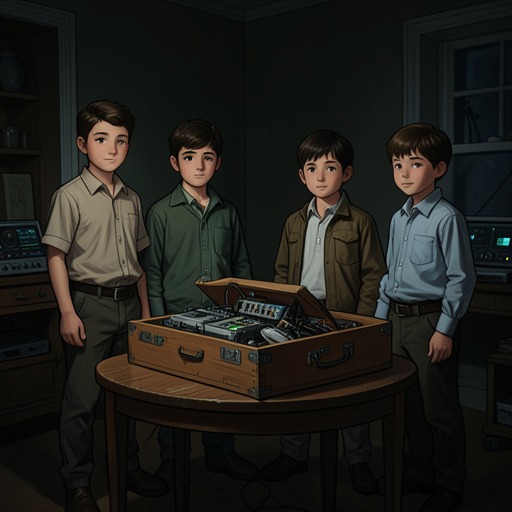
Inside, the boys search for the equipment they expect to find. Julius grows frustrated and kicks a box, while Lukas insists that the school must have somewhere to store its new computers. Sanchez spots unopened cartons on high shelves: computers and monitors, about forty boxes in all. Lukas fetches a step stool and passes the cartons down; Sanchez and Julius take them from him. The discovery changes the plan from a risky search into the apparent payoff they had hoped for. The computers are small but heavy, the screens light, and Lukas describes handling them as if in a rush.
Exposure and the Official Account
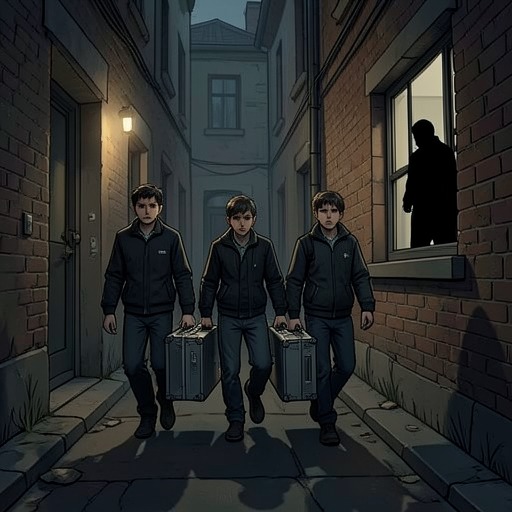
At a later school briefing, the police say they believe the break-in happened on Saturday night. According to nearby residents, three male suspects in black hooded jackets carried the stolen goods in a shopping cart toward U-Bahnhof Zwickauer Damm. The officers put the value at several thousand euros and say that shots were heard near the station the same evening, while stressing that they do not yet know whether the gunfire was connected to the burglary or whether the thieves were armed. The reported route and the unresolved shots leave the theft shadowed by a danger the investigation cannot yet explain.
The report reaches the school before the investigation is settled. In a computer shop, a man challenges three students who have arrived to sell brand-new computers: a large quantity of computers has just been stolen from a school, he points out, and their story that the goods came from a brother does not make their appearance there less suspicious. He throws them a newspaper. Its front-page headline reports a break-in at Gropiusstadt Comprehensive School and stolen teaching computers valued at 15,000 euros, with a photograph of the school entrance. That published figure is higher than the police briefing’s initial estimate of several thousand euros. The printed account makes the school itself unmistakable to Lukas and his companions, sharply narrowing the space for their denial.
At school, Herr Schiezeth explains why he believes the culprits must be students: the new equipment had not yet been publicly announced because he had delayed the news, and only a small circle knew it was there. He says that a teacher’s key was stolen during a lesson in Lukas’s class, further pointing toward an inside connection. Enraged, Herr Schiezeth promises that everyone involved will be found and punished, including people who only knew about the theft and did not help solve it. His threat widens the stakes beyond the people who physically carried the computers away: silence itself may be treated as complicity.
Suspicion, Bias, and the Cost of Silence
The investigation also becomes an opening for Herr Reinicke to seek information from Lukas. He tells Lukas that the stolen teacher’s key means the thieves must have been pupils from his class, then presents Lukas as the class’s only German student and asks him to listen for anything that might help. Rather than relying on evidence, Herr Reinicke couches his approach in racist claims about students with migrant backgrounds, depicting them as a group that will protect its own and casting Lukas as someone who ought to side with him. His invitation turns a school inquiry into a demand for ethnic loyalty as well as information.
The case’s pressure is felt beyond the school and the shop. When a mother asks Lukas what her son should do about being robbed on his route, he advises taking a longer bus journey through Alt-Buckow to avoid the place where the boys gather. He offers no prospect of confronting them or resolving the danger directly: in this instance, he sees avoidance as the only workable protection. The advice echoes the theft’s wider world, where access and movement matter as much as formal rules, while authority remains something the young people assess for its likely effectiveness.
The burglary’s consequences therefore extend beyond the missing equipment. A key taken from a teacher’s possession points investigators toward an insider; a key ring and a blank-firing gun had made the boys’ entry possible; the computers themselves become recognizable evidence as soon as they are taken to a shop. The case also exposes how quickly the search for responsibility can be diverted by prejudice. What begins as a concealed nighttime operation ends with students under threat of punishment, a teacher soliciting a pupil’s cooperation, and Lukas caught between knowledge of the crime and the demand to betray those around him.